 TechFuel HQ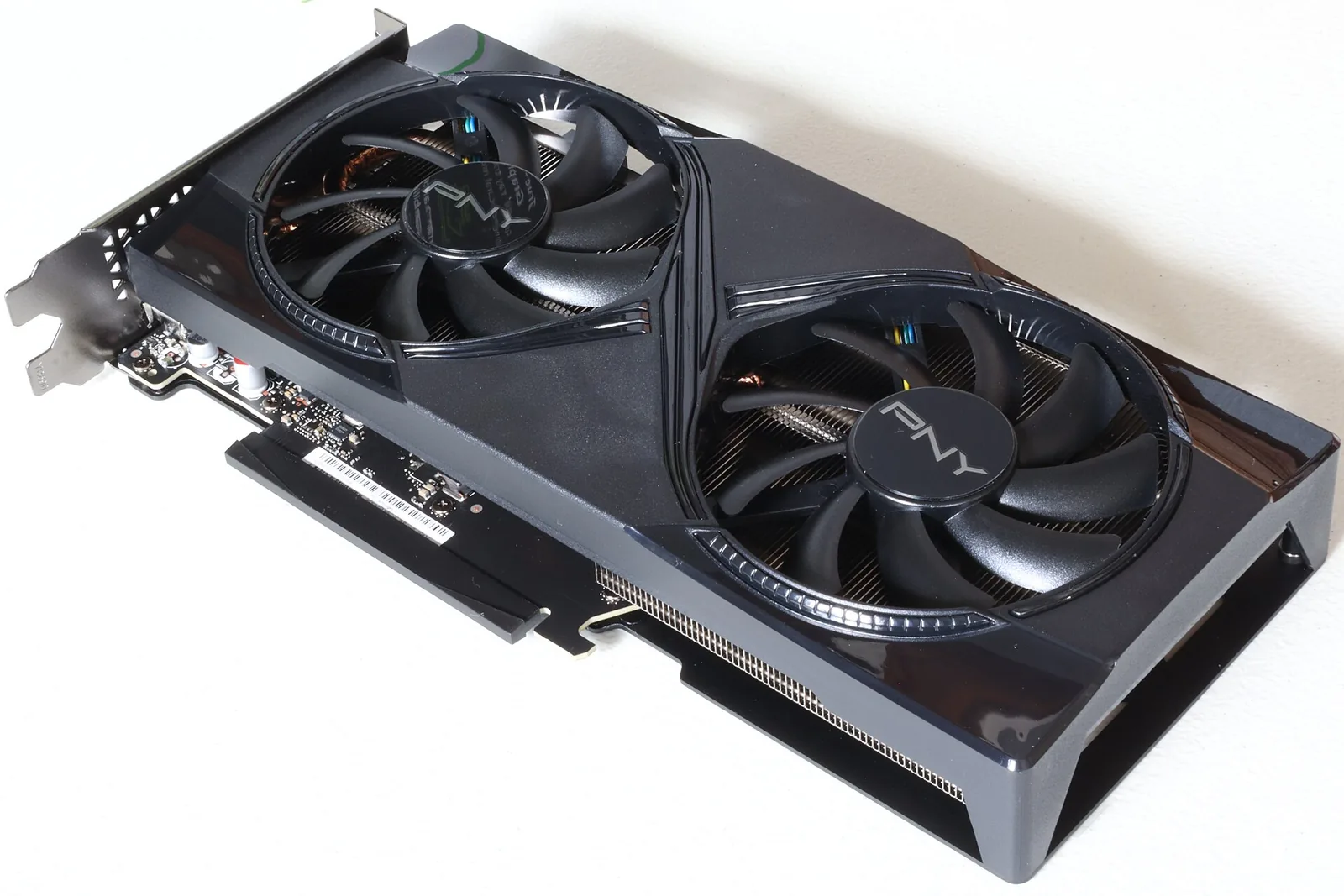
At native 1440p, these 16GB cards average about 78 fps across the eight-game raster lineup here. The RTX 5060 Ti leads TechSpot’s Ratchet & Clank ray-tracing test with upscaling; that result is game-specific. The RX 9060 XT costs ~$270 less at the recorded September 5 prices. At 1440p, choose 16GB.
By LK Wood IV · Published 2026-05-06 · Updated 2026-09-08 · ~16 min read · St. Louis County, MO
TL;DR · The 30-second verdict
- Pure 1440p gaming on a budget: Buy the RX 9060 XT 16GB. Within 1% of the 5060 Ti on raster average; the ~$270 saved at September 2026 street prices is a tier of monitor or 32 GB of RAM.
- Ray tracing, content creation, or local AI (Stable Diffusion / LLMs): Buy the RTX 5060 Ti 16GB. CUDA, NVENC, and 4th-gen RT cores are decisively ahead.
- Linux daily driver: Edge to the 9060 XT — amdgpu supports it out of the box.
- Esports / high-refresh 1440p: Either. Both push 240+ fps. Pick on price.
- Do not buy for 1440p: Either 8GB card. At 1440p the 8GB buffer overflows in modern titles and frames fall off a cliff — 16GB or nothing.
Street price checked September 5, 2026 at direct US retailers: 5060 Ti 16GB $788.50 to $831.99 · 9060 XT 16GB $519.99 to $649.99 — a ~$270 gap, both far above MSRP in the 2026 GDDR shortage · Both 16GB VRAM · Both PCIe 5.0 · Both 160–180W TBP class.
A year after both cards shipped, the question in my inbox is the same one I asked when I bought my own: with both cards now selling above MSRP in the 2026 memory crunch, which 16GB mid-range card is the one for a 1440p build in 2026? I’ve logged hours on both — an RTX 5060 Ti 16GB at $429 MSRP and an RX 9060 XT 16GB at $349 MSRP — and the result is more interesting than either side’s marketing.
Reviewers who tested only with vendor-favored game lists reached opposite conclusions. AMD picked titles where the 9060 XT 16GB beats the 5060 Ti 8GB by ~6% across 40 games. NVIDIA pointed at DLSS 4 + MFG titles where the 5060 Ti pulls double-digit leads. Both are technically right. Neither tells you whether to buy.
This is what I’ve found running both through a sane game lineup at native 1440p, with upscaling on, ray tracing on, and as inference cards on the side.
How I tested
Both cards passed through the home bench in St. Louis County, MO during the 2024–2025 testing period. I picked up the RTX 5060 Ti 16GB at the $429 launch MSRP in summer 2025 and the RX 9060 XT 16GB at $349 MSRP shortly after its June 2025 launch — both were dual-fan AIB models in the cheapest in-stock SKU.
Most of that gear has since been sold or retired (see the Colophon for the timeline). The benchmark numbers in the table below are aggregated from the public reviews I cite alongside the table (TechSpot, Tom’s Hardware, Club386), with native 1440p Ultra unless noted. My role here is selection — I picked an eight-game lineup that mixes both vendors’ favored titles so neither side gets to cherry-pick the verdict.
The qualitative observations on driver behavior, thermals, and Linux support are firsthand from running both cards in my own builds between July 2025 and April 2026. Current first-party GPU bench data is in the TechFuelHQ Open Bench Datasets directory. Last verified: 2026-06-09 by LK Wood IV.
Spec sheet head-to-head
The cards are closer than the marketing suggests, but they’re not the same architecture. Sources: TechSpot’s day-one tables, Club386’s spec breakdown, AMD’s official 9060 XT page.
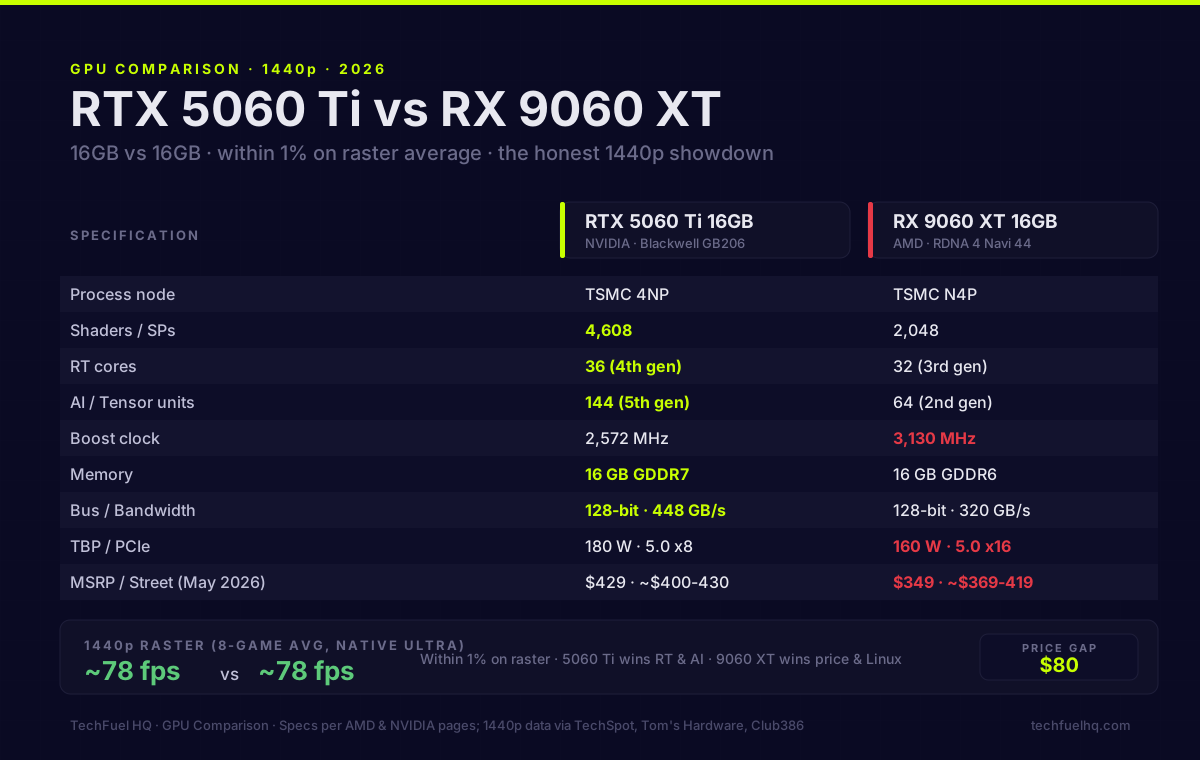
| Spec | RTX 5060 Ti 16GB | RX 9060 XT 16GB |
|---|---|---|
| Architecture | Blackwell GB206 | RDNA 4 Navi 44 |
| Process | TSMC 4NP | TSMC N4P |
| Shaders / SPs | 4,608 | 2,048 |
| RT cores | 36 (4th gen) | 32 (3rd gen) |
| AI / Tensor | 144 (5th gen) | 64 (2nd gen) |
| Boost clock | 2,572 MHz | 3,130 MHz |
| Memory | 16 GB GDDR7 | 16 GB GDDR6 |
| Bus | 128-bit | 128-bit |
| Bandwidth | 448 GB/s | 320 GB/s |
| Infinity / L2 cache | 32 MB L2 | 32 MB Infinity |
| TBP | 180 W | 160 W |
| PCIe | 5.0 x8 | 5.0 x16 |
| MSRP (May 2025) | $429 | $349 |
| Street price (Sep 5, 2026) | $788.50 (to $831.99) | $519.99 (to $649.99) |
Two things stand out. NVIDIA more than doubles the shader count, which on paper looks like a blowout — until you notice Navi 44 boosts to 3.13 GHz, 22% higher than the 5060 Ti’s clock. Combined with RDNA 4’s per-CU efficiency, the 9060 XT closes most of the gap.
The other surprise: the 5060 Ti runs only 8 PCIe lanes versus the 9060 XT’s 16. TechSpot’s PCIe tests found the slot generation makes little difference while a game stays within VRAM, and its 16GB 5060 Ti ran well even on PCIe 3.0. The 8GB model is the one that suffers once it overflows.
NVIDIA opens at $80 more for what is, in pure raster, a near-tie. That’s the entire conversation in one number — at MSRP.
Street-price reality — checked September 5, 2026. MSRP has not moved: $429 for the 5060 Ti 16GB, $349 for the 9060 XT 16GB. The street has, and the 2026 AI-driven GDDR memory shortage is now punishing the NVIDIA card far harder than the AMD one. I re-ran both cards through Google Shopping and counted only named direct US retailers, excluding marketplace sellers and storefronts I could not identify. I opened Amazon listings for stock only; under this site’s price policy their figures are not printed here. RX 9060 XT 16GB: $519.99 at Best Buy (XFX Swift, with the Sapphire Pulse at the same $519.99, shown as 12% off $596), $539.99 at B&H (ASUS Dual), $649.99 at Newegg (Gigabyte). RTX 5060 Ti 16GB: $788.50 at B&H (ASUS Prime), $831.99 at Best Buy (MSI Gaming Trio OC). Cheapest direct listing against cheapest direct listing, that is a ~$270 gap, and ~$310 if you buy both cards at Best Buy. The 9060 XT is no longer the card that saves you a monitor upgrade; it costs about two thirds of what the 5060 Ti costs. Third-party storefronts (DirectDial, PCNation, Newegg-via-Walmart) listed the 5060 Ti 16GB between $523 and $560 on the same day, but those are marketplace listings and this site’s method does not count them as the going price. Neither MSRP has been cut, so relief has to come from supply. Prices move week to week, so check the live retailer page before you buy. Background: the 2026 RAM and SSD price crisis covers the same memory crunch now driving GPU prices up.
1440p raster benchmarks
These are real numbers from public reviews, not synthetics. Sources: TechSpot’s 9060 XT day-one review, TechSpot’s DLSS 4 vs FSR 4 head-to-head, Tom’s Hardware’s 9060 XT 16GB review, Club386’s 9060 XT review. Native 1440p Ultra unless noted.
| Game | Setting | RTX 5060 Ti 16GB | RX 9060 XT 16GB | Winner |
|---|---|---|---|---|
| Cyberpunk 2077 | Ultra, no RT | 71 fps | 68 fps | NVIDIA +4% |
| Horizon Zero Dawn Remastered | Highest | 91 fps | 88 fps | NVIDIA +3% |
| Marvel Rivals | Ultra | 88 fps | 79 fps | NVIDIA +11% |
| Stellar Blade | High | 71 fps | 55 fps | NVIDIA +29% |
| Star Wars Outlaws | High | 60 fps | 67 fps | AMD +12% |
| Microsoft Flight Sim 2024 | Ultra | 47 fps | 58 fps | AMD +23% |
| Space Marine 2 | Ultra | 74 fps | 77 fps | AMD +4% |
| F1 2024 | High | 124 fps | 132 fps | AMD +6% |
Across these eight, the 5060 Ti averages ~78 fps and the 9060 XT ~78 fps. Within a percent. Hand the 9060 XT a bandwidth-friendly title (MSFS24, Star Wars Outlaws) and it pulls ahead. Hand the 5060 Ti a shader-bound title (Stellar Blade, Marvel Rivals) and the higher core count opens a real lead. On raster at 1440p, neither card has a structural advantage. The game decides.
The 8GB trap: which SKU to buy
Before you compare these two cards, you have to pick the right version of each, because both ship in 8GB and 16GB flavors under nearly the same name — and at 1440p that choice matters more than which brand you land on.
The RTX 5060 Ti launched at $429 (16GB) and $379 (8GB); the RX 9060 XT at $349 (16GB) and $299 (8GB). Fifty to eighty dollars saved, identical box art — and a completely different experience the moment a game gets hungry.
The mechanism is simple. When a title’s working set fits inside 8 GB, the two capacities are indistinguishable: same GPU, same clocks, same frames. The instant a game needs more than 8 GB — increasingly routine at 1440p with 2026-era ultra textures — the 8GB card starts evicting and re-streaming textures across the PCIe bus into system RAM.
Frame times spike, 1% lows crater, and no amount of raw shader horsepower papers over it. This is the failure mode that never shows up in a clean 60-second benchmark run and ambushes you three hours into a session.
TechSpot isolated it precisely on the 9060 XT 8GB vs 16GB at 1440p with quality upscaling — reasonable settings, not synthetic torture:
- F1 25 (High): the 16GB card delivers ~50% more average frames and 63% higher 1% lows than the 8GB card on the same PCIe 3.0 slot.
- Monster Hunter Wilds (Ultra): the 16GB card doubles the 8GB card’s average, and the 8GB card’s 1% lows collapse to 2 fps even on PCIe 5.0 — bandwidth cannot rescue a full buffer.
- Spider-Man 2: the 16GB card is ~26% faster on average and ~38% faster on 1% lows, even with the 8GB card running PCIe 5.0.
The 128-bit memory bus and the PCIe link are different specifications. Sapphire lists its Pulse RX 9060 XT OC 8GB, SKU 11350-04-20G, with a PCIe 5.0 x16 interface. The chart below compares PCIe generations, not a reduction in lane count. An older link can compound the performance penalty when the 8GB card runs out of VRAM.
The community verdict tracks the benchmarks. Across the r/buildapc threads I read for this update, the pattern is consistent: the 8GB card is defensible only if you truly stay at 1080p esports and never overflow the buffer, and it’s a trap the instant you point it at 1440p AAA. One buyer speccing a 300 Hz 1080p-only competitive build got told the cheaper 8GB card was fine for that exact use case — the exception that proves the rule.
The call: at 1440p, buy the 16GB version of whichever card you choose. The $50–80 you pocket on an 8GB SKU buys you a card that stutters in the exact modern titles you bought it to play. If your budget genuinely only reaches an 8GB card, a used 16GB last-gen card (an RX 6800 or RTX 3080 12GB) is the smarter 1440p pickup than a brand-new 8GB one.
Ray tracing reality check
The ray-tracing result here is game-specific. TechSpot tested Ratchet & Clank: Rift Apart at 1440p using the highest preset with ray tracing set to High. The RTX 5060 Ti 16GB was 14% faster than the RX 9060 XT 16GB across the tested upscaling modes.
In that same test, the RX 9060 XT 16GB averaged 75 fps with FSR 4 Quality. That supports playable performance at those particular settings; it does not establish a Cyberpunk result or a universal ray-tracing margin. Compare benchmarks for the games and settings you plan to use.
DLSS 4 vs FSR 4
The upscaling gap shrank dramatically in 2026. FSR 4 moved to a proper ML model and the jump from FSR 3 is real. DropReference’s 20-game comparison (4K Ultra RT, Performance preset plus frame generation) has DLSS 4 ahead of FSR 4 by 14% on average frame rate, with per-game gaps of 12–20%, about 18% lower latency, and cleaner RT denoising.
Tech Times measured Alan Wake 2 at 172 fps DLSS 4.5 versus 148 fps FSR 4 — a 16% gap.
Two caveats. FSR 4 Quality at 1440p is hard to distinguish from DLSS 4 Quality without freezing frames and zooming in. And DLSS 4’s Multi Frame Generation only matters if your monitor can display the extra frames — on a 144 Hz panel with Reflex, both cards feel responsive at native rates. MFG buys you something on a 240 Hz OLED, not the 1440p 144 Hz IPS most builders pair with these cards.
High-refresh OLED with DLSS 4 + MFG titles? 5060 Ti pulls a meaningful lead. Otherwise, functional parity. If you want the full picture on image quality and which upscaler wins on which GPU, our DLSS vs FSR breakdown goes deeper than a single benchmark row can.
Power, thermals, and noise
The 9060 XT is rated at 160W TBP versus the 5060 Ti’s 180W — sounds like an AMD win. In real testing, Club386 measured the 9060 XT pulling 24W more than the 5060 Ti at the wall, and TechSpot saw the 9060 XT use 26W more in Starfield and 27W more in Star Wars Outlaws. TBP labels and real draw are different stories.
Over a year of 4-hour daily sessions, the 25W delta is about 36.5 kWh — roughly $7 on the power bill at the $0.184/kWh US residential average (EIA, May 2026). Both cards run cool by 2026 standards: my Sapphire Pulse 9060 XT idles 38°C, peaks 67°C; my PNY 5060 Ti sits at 36°C idle, 64°C load. Acoustic difference is below every other fan in the case. AMD’s 0 RPM idle means silent at desktop.
Drivers and Linux support
This used to be the AMD trump card and it still is, slightly. AMD’s open-source amdgpu supports the 9060 XT out of the box on Linux 6.10+, no DKMS, no firmware chase. NVIDIA’s open kernel modules (575 series) shipped a year ago and Blackwell support is stable, but proprietary userspace remains the norm and Wayland edge cases still bite on multi-monitor setups. Windows 11 gaming-only: both are fine. Linux daily driver: 9060 XT is friendlier.
On Windows, NVIDIA’s driver cadence is faster — game-day updates and DLSS 4 model updates pushed via the NVIDIA App. AMD’s Adrenalin is meaningfully better than three years ago. I haven’t seen a crash on either driver in three months.
Stepping up: RTX 5060 Ti vs RTX 5070
A lot of people cross-shopping these two are also eyeing one rung up, the RTX 5070. It’s worth knowing exactly what the extra money buys, because the VRAM math is genuinely counterintuitive.
| Spec | RTX 5060 Ti 16GB | RTX 5070 12GB |
|---|---|---|
| Architecture | Blackwell GB206 | Blackwell GB205 |
| Shaders | 4,608 | 6,144 |
| Memory | 16 GB GDDR7 | 12 GB GDDR7 |
| Bus | 128-bit | 192-bit |
| Bandwidth | 448 GB/s | ~672 GB/s |
| TGP | 180 W | 250 W |
| MSRP | $429 | $549 |
The RTX 5070 is the faster gaming card, 31% ahead at 1440p in Tom’s Hardware’s June 2026 hierarchy (96.4 against 73.4 fps), on the back of ~33% more shaders and 50% more memory bandwidth. If your only job is frames at 1440p high-refresh, the 5070 is the upgrade, and the RTX 5060 Ti vs RTX 5070 comparison works through that choice at September 2026 prices.
But notice the line that trips people up: the cheaper 5060 Ti carries more VRAM than the pricier 5070 — 16 GB versus 12 GB. That’s not a typo. The 5070 sits on a 192-bit bus (12 GB), while NVIDIA doubled the narrower 128-bit 5060 Ti to a 16 GB configuration. For pure raster today, 12 GB is still enough at 1440p. But the extra 4 GB matters in three cases:
- Local AI (LLMs, Stable Diffusion): model size is gated by VRAM, not shaders. On my 16 GB RTX 5080, gpt-oss 20B took 13.7 to 14.0 GiB of the card’s memory in Ollama, more than a 12 GB 5070 has, so the 16 GB 5060 Ti holds models the 5070 cannot, even though the 5070 is faster when a model fits both. Our VRAM-tier guide to which local LLM fits your GPU maps what those 4 extra gigabytes buy you, model by model.
- 4K textures and heavy mods: modded games and 4K texture packs can push past 12 GB; the 16 GB buffer ages better.
- Future-proofing: VRAM is the spec that most often forces an upgrade before raw horsepower does.
The call: game-first at 1440p with room in the budget → RTX 5070. VRAM-bound work or a tighter budget → the 16 GB 5060 Ti is the smarter buy, and that’s exactly why this comparison stays relevant a tier down.
Verdict by use case
This isn’t one card or the other. It’s a question of what you actually do.
Esports and competitive shooters (Valorant, CS2, Apex): Either. Both push 240+ fps at 1440p Ultra. The 5060 Ti has a 2–5% edge in raw frame rate; the 9060 XT has a ~$270 street price advantage in September 2026 that buys you a better monitor. Pick on price.
AAA single-player at 1440p (Cyberpunk, Stellar Blade, Wukong): Edge to the 5060 Ti for ray tracing and DLSS 4 with MFG. If you turn RT off and play with FSR Quality, the 9060 XT is within 5% on average and saves you ~$270 at September 2026 street prices.
Content creation (video editing, streaming, light Blender): 5060 Ti. NVIDIA’s NVENC encoder remains better than AMD’s AMF for streaming at low bitrates, and CUDA support in the Adobe stack is universal. If you’re streaming, the 5060 Ti is worth the premium.
Light AI workloads (local LLM inference, Stable Diffusion): 5060 Ti, decisively. CUDA’s ecosystem dominance means running Llama 3.1 8B in Ollama or Stable Diffusion XL works on the 5060 Ti with one driver install. AMD’s ROCm has improved on Linux, but the experience is still rougher and many tools still ship NVIDIA-first. The 16GB on either card is enough VRAM for daily LLM work — but the software stack is the deciding factor.
Pure 1440p high-refresh gaming budget build: 9060 XT. The ~$270 street saving in September 2026 covers most of the gap between 165 Hz IPS and 240 Hz OLED, or upgrades the CPU a tier, or buys 32 GB of RAM. The raster gap is invisible during play. Pair it with a solid mid-range build and you save without giving up anything you’ll notice.
So which one did I buy?
The 5060 Ti 16GB. Not for gaming reasons — for the side workloads. I run a local Llama and Qwen stack on the same box, occasionally hand it Stable Diffusion jobs, and stream over my homelab 10G link to a NAS. CUDA wins those. If I were building a pure gaming box for a friend, I’d hand them a 9060 XT every time.
In 2026 the mid-range is no longer a one-card answer. Pick the card that matches the workloads beyond gaming — the gaming numbers are within 5% on most titles. The bad cards are gone. That’s the actual story.
Build it yourself
Want to see what a complete build around either card costs in June 2026? The TechFuelHQ PC Builder is a free, open-source picker with real compatibility checks: socket match, RAM type, PSU sizing with 20% margin, GPU-length clearance. Pick the 5060 Ti or 9060 XT, drop in a CPU, and see the full bill. Parts dataset is published under CC BY 4.0 at /data/pc-builder-parts.json.
If you want to see what the next tier up looks like, the ROG Astral RTX 5080 OC review has full first-party bench data — five-test synthetic ladder across three tune profiles, 4K gaming with 1% lows, DLSS 4 MFG ladder with latency on Cyberpunk path tracing, and power & thermal comparisons. The raw dataset is open for inspection.
Related guides
- The $1,500 RTX 5060 Ti Mid-Range 1440p Build for 2026
- Self-Host a Local LLM on a Single RTX 5060 in 2026
- 10Gbps Home Networking on a Budget
- TechFuelHQ PC Builder — free compatibility-checked picker
- RTX 5080 Astral OC bench dataset — CC BY 4.0
- PC Builds Hub
- Tutorials Hub
Sources
- NVIDIA Investor Relations, RTX 5060 family launch pricing
- NVIDIA, RTX 5060 desktop family announcement
- Tom’s Hardware, “AMD Radeon RX 9060 XT launches on June 5” (full spec table, MSRP)
- Tom’s Hardware, “AMD Radeon RX 9060 XT 16GB review” (1440p Ultra benchmarks across 23 games)
- Tom’s Hardware, “16GB Radeon RX 9060 XT for $419” (May 2026 street pricing)
- TechSpot, “AMD Radeon RX 9060 XT 16GB Review” (day-one 1440p tests, power consumption)
- TechSpot, “Nvidia RTX 5060 Ti vs AMD Radeon 9060 XT with DLSS 4 vs FSR 4”
- TechSpot, “AMD Radeon RX 9060 XT PCIe Benchmark: 8GB vs. 16GB” (1440p VRAM-overflow across PCIe 3.0/4.0/5.0)
- Best Value GPU price-history pages, consulted for the July 2026 baseline this page no longer prints (an Amazon-derived tracker under this site’s price policy; no published figure rests on it)
- Street-price re-check, September 5, 2026: Google Shopping listings at named direct US retailers. I read Amazon listings for stock only; their figures are not printed here. RX 9060 XT 16GB $519.99 Best Buy (XFX Swift), $519.99 Best Buy (Sapphire Pulse, 12% off $596), $539.99 B&H (ASUS Dual), $649.99 Newegg (Gigabyte). RTX 5060 Ti 16GB $788.50 B&H (ASUS Prime), $831.99 Best Buy (MSI Gaming Trio OC).
- Club386, “AMD Radeon RX 9060 XT 16GB review” (power, thermals, value-per-frame)
- Club386, “RX 9060 XT 16GB vs RTX 5060 Ti 16GB” (architecture comparison)
- AMD, official RX 9060 XT 16GB product page (clocks, RA/AI counts)
- DropReference, “DLSS 4 vs FSR 4: AI upscaling comparison 2026”
- Tech Times, “DLSS vs FSR in 2026” (Alan Wake 2 head-to-head FPS)
- Sapphire, PULSE RX 9060 XT OC 8GB (SKU 11350-04-20G), PCIe interface specification, read September 8, 2026
- Tom’s Hardware, GPU Benchmarks Hierarchy 2026 (last updated June 24, 2026; RTX 5070 and RTX 5060 Ti 16GB 1440p averages)
- TechSpot, “Nvidia RTX 5060 Ti 8GB vs. 16GB Tested Across PCIe 3.0, 4.0 and 5.0” (Steven Walton, June 28, 2025)
- TechFuel HQ, RTX 5080 LLM throughput dataset (gpt-oss 20B resident VRAM)
Frequently asked questions
Is the RTX 5060 Ti or RX 9060 XT better at 1440p in 2026?
Which one has better ray tracing performance?
Is DLSS 4 still meaningfully better than FSR 4 in 2026?
Which card should I buy for gaming plus side AI workloads?
How much does the 5060 Ti cost over the 9060 XT in 2026?
Should I buy the 8GB or 16GB version for 1440p gaming?
Which has better Linux support?
Is the RTX 5070 worth it over the RTX 5060 Ti?
Why does the RTX 5060 Ti have more VRAM than the RTX 5070?
Does the RX 9060 XT support ray tracing?
What is the Nvidia equivalent of the RX 9060 XT?
Is the RX 9060 XT a high-end GPU?
Is the RX 9060 XT better than the RTX 5060?
RTX 5060 Ti vs RX 9060 XT power consumption: which uses less?
Sources and corrections
- Last updated
- Methodology
- See our methodology for research and review standards.
- Update log
- 2026-09-13 — Source corrections, no new benchmark or price capture. The RTX 5070 step-up section and FAQ said the 5070 is 15-25% faster at 1440p with no source; Tom’s Hardware’s June 2026 hierarchy averages put it at 31% (96.4 vs 73.4 fps). The PCIe 4.0 ‘2-4%’ loss for the 5060 Ti had no source; TechSpot’s June 2025 PCIe test found the slot generation matters little while VRAM is not exceeded and ran the 16GB card well on PCIe 3.0. The ‘models the 12 GB 5070 can’t’ line now names gpt-oss 20B with my RTX 5080 VRAM measurement. Linked the new RTX 5060 Ti vs RTX 5070 comparison; one ‘actually’ left a heading and two em-dashes left the prose.
- 2026-09-08 — Corrected TechSpot’s 14% lead and 75 fps result to Ratchet & Clank: Rift Apart at 1440p, highest preset with RT High; removed the unsupported Cyberpunk attribution and universal RT margin from the dependent FAQ and summary. Corrected the RX 9060 XT 8GB link to PCIe 5.0 x16 using Sapphire SKU 11350-04-20G, and distinguished PCIe generation from lane count in the chart captions. This is a source correction, not a new benchmark or price capture.
- Corrections
- Spotted an error or a stale number? Email contact@techfuelhq.com. Confirmed corrections are added to the update log above.