 TechFuel HQ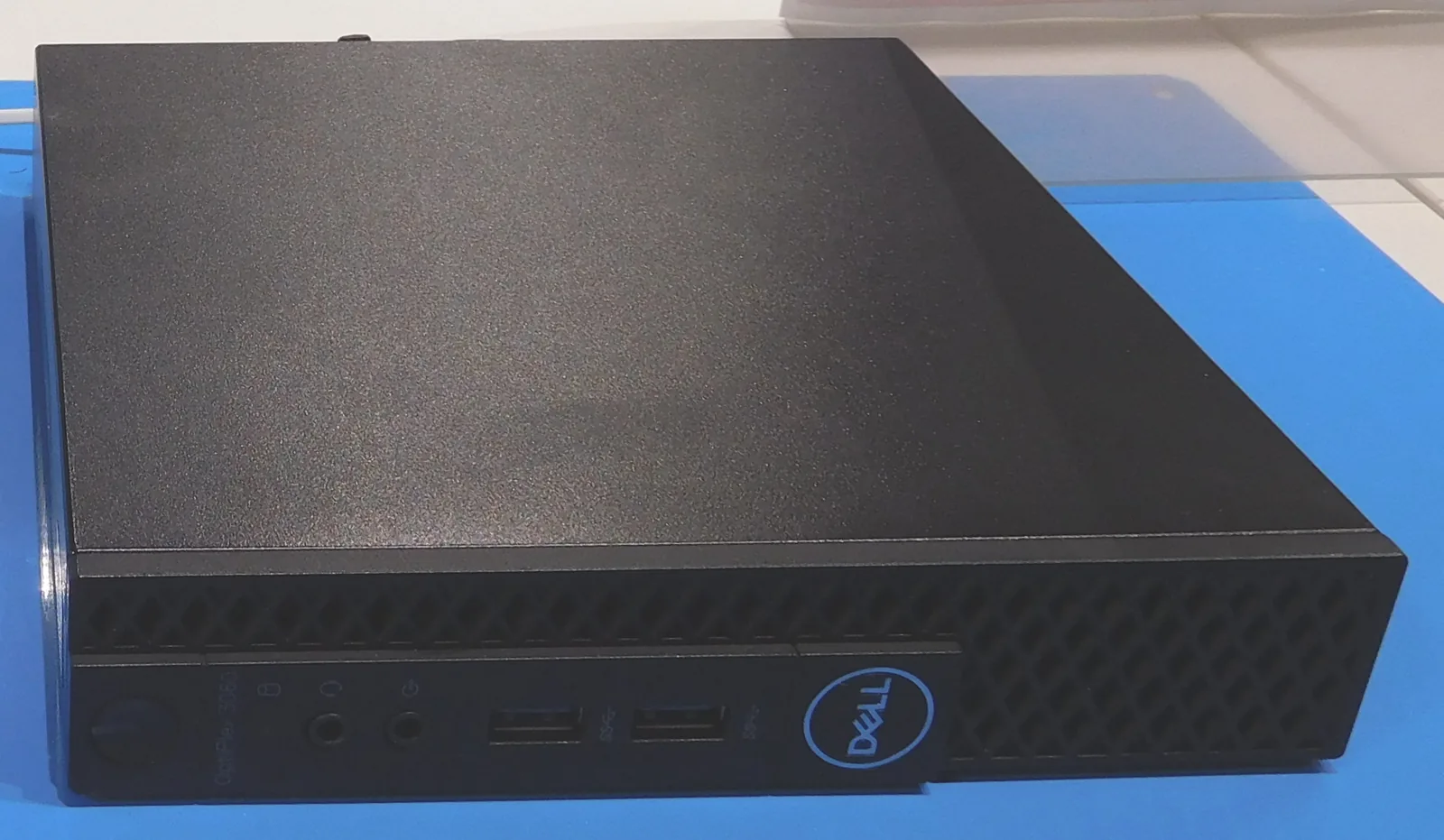
Proxmox VE’s official minimum is almost nothing: a 64-bit CPU with Intel VT-x or AMD-V, 1 GB of RAM, a disk, and one NIC. That boots the hypervisor but runs no useful guests. For a real homelab, plan on a multi-core CPU like an Intel N100, 16 to 32 GB of RAM, and an SSD.
By LK Wood IV · Published 2026-06-19 · Updated 2026-08-22 · ~11 min read · St. Louis County, MO
There are really two Proxmox hardware conversations, and they give wildly different answers. The spec-sheet one is settled in a single sentence — the official minimum is trivial, and the table below is the whole story. The conversation that actually matters is the second one: how those requirements scale the moment you start stacking real services onto the box. That is where people either underbuy and regret it a month later, or overbuy a 128 GB server to run a Pi-hole. So that is where this page spends its time.
Everything here is cited to Proxmox’s own documentation or, where I give workload numbers, to the community sources I trust. If a spec isn’t sourced, it isn’t here.
The official minimum vs recommended requirements
Proxmox publishes two tiers on its hardware requirements page: a bare minimum for evaluation and testing, and a recommended set for production. Here is exactly what they list, plus the ZFS guidance from the Proxmox wiki:
| Component | Official minimum (eval/test) | Recommended (production) | Practical homelab target |
|---|---|---|---|
| CPU | 64-bit Intel 64 / AMD64 with Intel VT-x / AMD-V, or (since the 2026-08-05 arm64 release) 64-bit Arm, ARMv9-A or newer | Intel 64 / AMD64 with VT-x / AMD-V flag (or 64-bit Arm, ARMv9-A or newer) | Any modern x86; N100/N150 mini-PC chip is fine |
| RAM | Minimum 1 GB | 2 GB for OS + services, plus RAM for each guest | 16-32 GB to start |
| ZFS / Ceph RAM | n/a | Approx. 1 GB extra per TB of used storage | +1 GB per TB on top of guest RAM |
| System disk | A hard drive | Fast, redundant storage; SSDs preferred | SSD/NVMe for OS + VM storage |
| Network | One NIC | Redundant Gbit NICs; 10 GbE+ supported | 1x Gbit is fine for most homelabs |
| Passthrough | n/a | CPU with VT-d / AMD-Vi (IOMMU) flag | Needed only for GPU/NIC passthrough |
Source: Proxmox VE Hardware Requirements and the Proxmox ZFS on Linux wiki.
The key takeaway from the official page: there are no exotic requirements. As one long-standing Proxmox forum answer puts it, “Proxmox doesn’t have any major hardware requirements — the cpu and bios should support Intel VT or AMD-V but that’s pretty standard these days.” The minimum column is real but misleading — 1 GB boots the host and leaves nothing for guests. The recommended column is where you should start planning.
CPU: what “VT-x / AMD-V” actually means
On x86, Proxmox needs a 64-bit processor with hardware-assisted virtualization. On Intel that flag is VT-x; on AMD it is AMD-V. This is standard on every desktop, server, and mini-PC CPU made in roughly the last ten years — including the budget Intel N100 and N150 chips that dominate cheap homelab mini PCs. The one thing to check is that virtualization is enabled in the BIOS/UEFI, because some vendors ship it off. Since 2026-08-05 there is also an official arm64 build: the Proxmox roadmap calls “Proxmox VE 9.2 for 64-bit ARM (arm64)” the “First Proxmox VE release for a CPU architecture besides x86-64 (amd64)” and names NVIDIA Grace and Vera as its supported platforms, and the requirements page now reads “Alternatively, 64-bit Arm”. That is enterprise Arm server hardware. It changes nothing about the advice below.
If you intend to pass a whole GPU or NIC into a VM, you need a second flag: IOMMU, which Intel calls VT-d and AMD calls AMD-Vi. This is a board-and-CPU feature, not just a CPU one, so verify both support it before buying for a passthrough build.
RAM: the formula that actually matters
Proxmox’s own rule is simple: about 2 GB for the OS and services, then add the memory you assign to each VM and container on top. The host overhead is small; your guests dominate the total.
The exception is ZFS, which is covered below — it wants meaningful RAM of its own. If you are not using ZFS, you can size RAM as “2 GB for Proxmox + the sum of your guest allocations + a small buffer.”
Storage: SSD over capacity, every time
The official minimum is one hard drive. The recommendation is fast and redundant storage, with SSDs explicitly called out for best results. For data integrity Proxmox recommends either hardware RAID with a battery-backed write cache (BBU) or non-RAID disks managed by ZFS.
For a homelab, the pattern that works: a small SSD or NVMe for the Proxmox OS, and a separate SSD/NVMe drive or ZFS pool for your VM and container disks. If that pool is ZFS, size endurance as well as capacity — copy-on-write write amplification consumes a drive’s rated TBW faster than the host write numbers suggest, which the SSD endurance calculator lets you model. Spinning hard drives are fine for bulk media storage on a NAS, but running VM root disks off a single HDD makes every guest feel sluggish.
If you are specifying memory for that host, ECC is worth the board — and confirming it is actually active is the part most builds skip.
The ZFS RAM rule, verified
ZFS is where homelab RAM folklore goes wrong, so here is the real current guidance from the Proxmox ZFS on Linux wiki:
- ZFS “depends heavily on memory, so you need at least 8 GB to start.”
- The sizing rule is 2 GiB base + 1 GiB per TiB of storage. So an 8 TiB pool wants about 10 GiB reserved for the ARC.
- Since Proxmox VE 8.1, the ZFS ARC default is 10% of host RAM, capped at 16 GiB — much lower than the old “use half your RAM” behavior, which is why ZFS feels less RAM-hungry on recent installs than its reputation suggests.
- You can hard-cap the ARC by setting
zfs_arc_maxin/etc/modprobe.d/zfs.conf(for exampleoptions zfs zfs_arc_max=8589934592for an 8 GiB cap), then rebooting.
The old “1 GB per TB” number you see everywhere is a reasonable rule of thumb and matches the headline figure Proxmox uses for ZFS/Ceph on its requirements page. The wiki’s “2 GiB base + 1 GiB/TiB” is the more precise version. Either way: ZFS RAM is on top of your guest RAM, not shared with it. If you are deciding between ZFS, TrueNAS, and Unraid as your storage backend, the storage backend comparison walks through the tradeoffs.
The practical rule homelabbers repeat on the Proxmox and r/homelab forums follows straight from that math: if a box has less than 8 GB of RAM, skip ZFS and use ext4 or LVM-thin for the system disk instead. ZFS on a memory-starved host spends RAM you needed for guests and still cannot cache the pool well, so you get the complexity without the speed. Reserve ZFS for boxes with 16 GB or more, and always size the ARC on top of your guest allocations, never carved out of them.
ECC RAM is recommended for ZFS but not strictly required — for a learning homelab, non-ECC is fine; for anything holding data you care about, ECC is the safer call.
What you actually need, by workload
Specs in a vacuum don’t help. Here is how the requirements scale with what you are actually running. These are homelab-oriented targets, not enterprise sizing.
The RAM math is where the “scales with workload” idea stops being abstract. Both builds below start with the same ~2 GB Proxmox base at the bottom of the tank. What separates a box that is happy on 32 GB from one that wants 64 GB is almost entirely one segment — the ZFS ARC cache — plus a couple of heavier VMs stacked on top.
A file server / NAS (a few shares, light use)
A single mini PC with an Intel N100/N150, 8-16 GB RAM, and one or two drives handles a basic file server easily. If you run that NAS on ZFS, push RAM toward 16 GB and follow the ZFS rule above for the pool size. CPU load for plain file serving is trivial; RAM for ZFS ARC is the thing to size, not cores.
A handful of VMs and containers (the typical first homelab)
This is where most people land: Pi-hole or AdGuard, a reverse proxy, Home Assistant, a few Docker stacks, maybe one or two small VMs. 16 GB of RAM is a comfortable floor and 32 GB gives real breathing room. A 4-core mini PC is plenty because most of these services idle. Lean on LXC containers rather than full VMs wherever you can — a bare Debian container uses roughly 30-60 MB of RAM versus 200-400 MB for the equivalent VM, so an LXC-heavy lab fits far more services into the same box. The LXC vs VM decision guide covers exactly when to use each. To size this precisely for your specific RAM and core count, the Proxmox capacity planner does the math for you.
Plex / Jellyfin with hardware transcoding
Media transcoding is the one workload where the GPU question matters, and the answer is an Intel integrated GPU, not a discrete card. Jellyfin’s official Intel hardware-acceleration docs state that Intel Quick Sync Video (QSV) is the preferred method on mainstream Intel GPUs for better performance, supported on Broadwell (5th-gen Core) and newer.
In practice, the Intel N100 iGPU with Quick Sync handles roughly 3-4 simultaneous 4K-to-1080p transcodes, or about 8 streams at 1080p, which is more than enough for a household and even a few remote users. That is why the N100/N150 mini PC has become the default budget media-server platform — you get hardware transcoding without buying or passing through a GPU. RAM-wise, the transcode itself is light; size RAM for everything else you run alongside it.
A ZFS NAS plus VMs on one box
Combining a ZFS storage pool with a stack of VMs is the most RAM-hungry homelab pattern, because you pay for both. Add up: ~2 GB for Proxmox, your ZFS ARC (2 GiB + 1 GiB per TiB of pool), and the RAM for every guest. A 4 TB ZFS pool running half a dozen VMs realistically wants 32 GB and is happier at 64 GB. This is the build where stepping up to a used enterprise box or a higher-RAM mini PC pays off.
Do you need a GPU? (Almost never)
For Proxmox itself: no. The hypervisor is headless and managed through a web UI from your laptop, so the host needs no graphics card and is happy with integrated graphics or no display output at all. Adding a discrete GPU to a Proxmox host does nothing for the host.
You add a GPU only for a guest:
- Hardware transcoding for Plex/Jellyfin — and even then, an Intel iGPU with Quick Sync is the right tool, not a discrete card.
- GPU passthrough to a VM for gaming, video editing, or local AI inference — this needs the IOMMU (VT-d/AMD-Vi) flag and a VM, not a container.
If neither of those is on your roadmap, skip the GPU entirely and spend the money on RAM and SSD instead.
What Proxmox VE 9 changes (and what it doesn’t)
Proxmox VE 9.0 was released on August 5, 2025 on Debian 13 “Trixie” with the Linux 6.14 kernel. The current stable release is VE 9.2 (May 21, 2026), which moves to the Linux 7.0 kernel on Debian 13.5 — VE 9.1 (November 2025, kernel 6.17) sat in between. VE 8.4 was the final 8.x release, and per Proxmox’s support lifecycle table the 8.x line’s Proxmox EOL is 2026-08 — reached this month, with its Debian 12 base already past security-support end in 2026-07. If you are building fresh in 2026, there is no reason to start on 8.x — install 9.2 directly.
The hardware requirements themselves did not change — VE 9 still wants a 64-bit VT-x/AMD-V CPU, the same RAM and disk minimums, and a NIC. What changed is underneath: a newer kernel for better hardware support, plus a handful of breaking changes (LVM autoactivation defaults, possible network-interface renames, PCI-passthrough quirks on the new kernel). If you are upgrading an existing box rather than installing fresh, read the Proxmox VE 8 to 9 upgrade gotchas first — the “requirement” for a clean VE 9 upgrade is doing the pre-flight checks, not new hardware.
Putting it together: a sane 2026 homelab baseline
If you want a single recommendation that covers most first homelabs without overbuying:
- CPU: an Intel N100/N150 mini PC (VT-x, Quick Sync for transcoding) or a used small-form-factor desktop.
- RAM: 16 GB minimum, 32 GB if you can — and more if you run ZFS or many VMs.
- Storage: an SSD or NVMe for the OS and VM disks; add bulk drives only for media/NAS storage.
- Network: one Gigabit NIC is fine; 10 GbE only matters if you are moving large files between machines constantly.
- GPU: none, unless you are passing one through or want discrete transcoding muscle.
For the full hands-on walkthrough from USB installer to first VM on exactly this kind of box, see the Proxmox mini PC setup guide, and for picking the actual hardware, the best mini PCs for a homelab in 2026 breaks down the current options. If you would rather hit these specs cheaply with used enterprise gear, used enterprise vs mini PC weighs that path against the small-box route.
Sources
- Proxmox VE Hardware Requirements — official minimum and recommended CPU, RAM, storage, network, and the ZFS/Ceph “1 GB per TB” note; re-checked 2026-08-22, when the CPU line also read “Alternatively, 64-bit Arm (Armv9-A or newer processor)”.
- Proxmox VE Roadmap — “Proxmox VE 9.2 for 64-bit ARM (arm64)”, released 05 August 2026, “First Proxmox VE release for a CPU architecture besides x86-64 (amd64)”.
- Proxmox VE System Requirements wiki — the wiki mirror of the same requirements.
- Proxmox ZFS on Linux wiki — ZFS “at least 8 GB” guidance, the “2 GiB base + 1 GiB/TiB” rule, the 10%-capped-at-16-GiB ARC default since VE 8.1, and
zfs_arc_max. - Proxmox Virtual Environment 9.0 release (Aug 5, 2025) — VE 9 on Debian 13 Trixie, kernel 6.14.
- Proxmox VE FAQ — support lifecycle table — per-version support windows: VE 8 on Debian 12 Bookworm, Debian EOL 2026-07, Proxmox EOL 2026-08.
- Jellyfin Intel hardware acceleration docs — Intel Quick Sync (QSV) as the preferred transcoding path, Broadwell and newer.
Sizing a specific box? The Proxmox capacity planner tells you how many VMs and containers your RAM, cores, and ZFS ARC allocation can actually support. Deciding between containers and full VMs for each service? The LXC vs VM guide has the decision tree. Ready to build? Start with the best mini PCs for a homelab and the Proxmox mini PC setup walkthrough.
Frequently asked questions
What are the minimum requirements for Proxmox?
What are the Proxmox CPU requirements?
What are the Proxmox minimum requirements for storage?
Do you need a GPU to run Proxmox?
What are the Proxmox 9 minimum requirements?
How much RAM do I need for Proxmox?
Is 32 GB of RAM enough for Proxmox?
How much disk space does Proxmox VE need?
Sources and corrections
- Last updated
- Methodology
- See our methodology for research and review standards.
- Update log
- 2026-08-14 — Corrected the VE 8.4 support-window sentence and its citation. The page read ‘its maintenance window closes around August 2026’ – forward-looking and vague (‘around’) for a date that has now arrived – and the sources list attributed that window to the VE 9.0 press release. Full-text retrieval of that press release on 2026-08-14 found no support-window, EOL, or lifecycle statement anywhere in it (its only occurrence of ‘2026’ is the copyright footer). The real primary source is Proxmox’s support lifecycle table at pve.proxmox.com/wiki/FAQ, which lists VE 8 as Debian 12 Bookworm, first release 2023-06, Debian EOL 2026-07, Proxmox EOL 2026-08. Claim re-pointed to that table and stated as reached rather than approaching. The VE 9.2 / May 21 2026 / kernel 7.0 claims on this page were spot-checked and left unchanged: download.proxmox.com lists no ISO newer than proxmox-ve_9.2-1.iso, Last-Modified Thu, 21 May 2026.
- 2026-08-22 — Goal-5 segment 09 re-verification (2026-08-22). (1) The CPU requirement was x86-only on this page; Proxmox’s requirements page now reads ‘CPU: 64bit (Intel 64 or AMD64). Alternatively, 64-bit Arm (Armv9-A or newer processor)’ and the roadmap lists ‘Proxmox VE 9.2 for 64-bit ARM (arm64)’, released 05 August 2026, as the first non-x86 release (NVIDIA Grace/Vera). The table CPU row, the CPU section and the CPU FAQ now carry the Arm alternative, scoped as enterprise-only. (2) The byline ‘Updated 2026-07-03’ was stale against the 2026-08-14 correction and this edit; re-stamped. Re-confirmed live the same day: ZFS wiki ARC default ‘10 % of the host memory, clamped to a maximum of 16 GiB’ with ‘Before Proxmox VE 8.1 … 62.5% starting on ZFS 2.3.0 or 50% for older versions’, the 2 GiB + 1 GiB/TiB rule and the zfs_arc_max example; FAQ lifecycle row ‘Proxmox VE 8 | Debian 12 (Bookworm) | 2023-06 | 2026-07 | 2026-08’; roadmap 9.2 (21 May 2026, kernel 7.0, Debian 13.5) and 9.1 (19 Nov 2025, kernel 6.17); the 9.0 press release (05 Aug 2025, Debian 13 Trixie, kernel 6.14.8-2); Jellyfin docs ‘QSV - Preferred on mainstream GPUs’ and ‘Broadwell (5th gen Core) and newer’.
- Corrections
- Spotted an error or a stale number? Email contact@techfuelhq.com. Confirmed corrections are added to the update log above.